Beyond the Household: Tackling Systemic Barriers to Gender and Social Equality
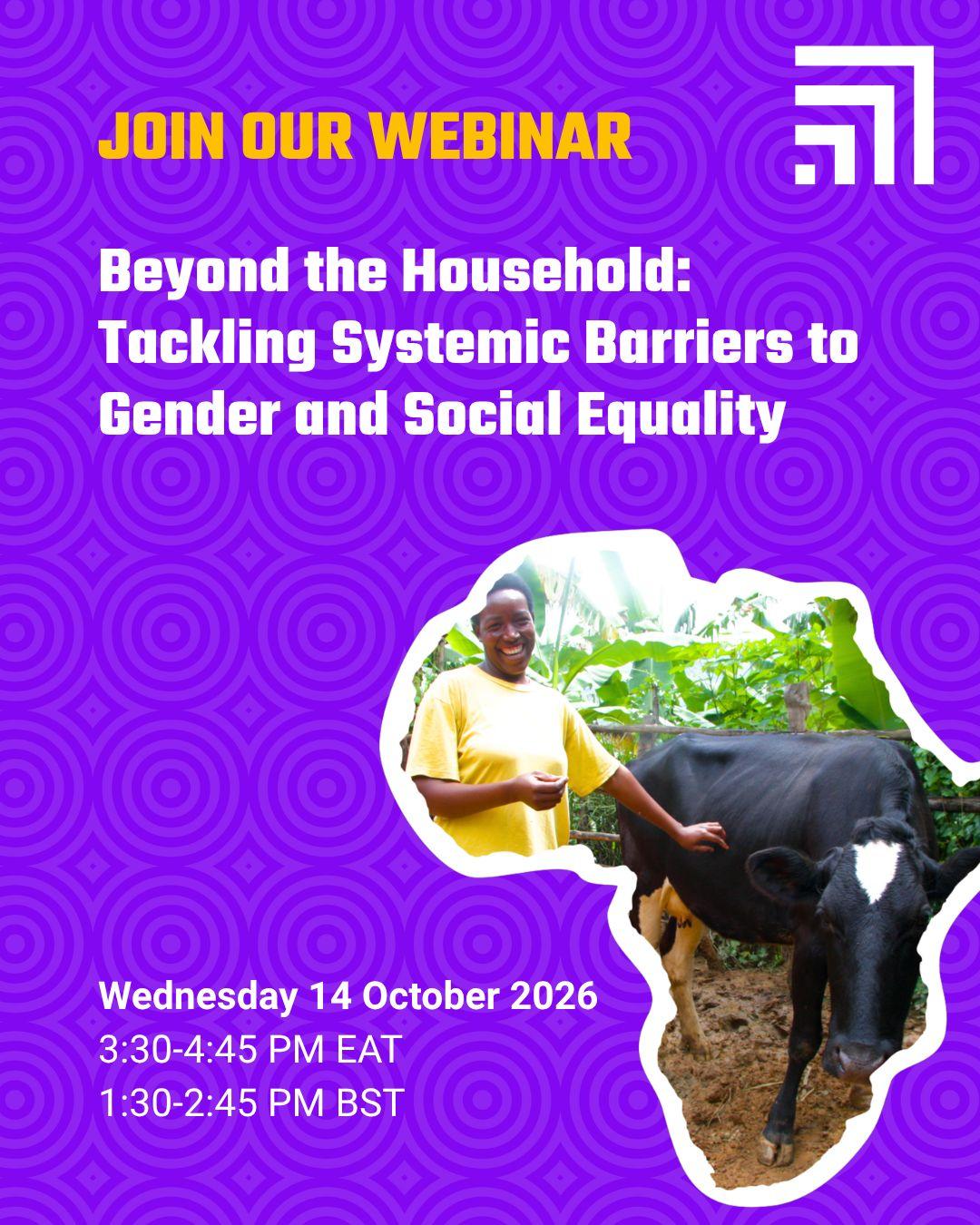
How can we move beyond household-level interventions to address the wider systems that shape gender equality and social inclusion in rural Africa?
Achieving lasting gender equality and social inclusion requires us to look beyond what happens within individual households and consider the wider systems that shape people’s opportunities.
In this webinar, Ripple Effect will share learning from our work in Ethiopia’s dairy sector, bringing together a panel of experts with different experiences and perspectives to explore what we have collectively learned about the barriers to greater inclusion – and what action is needed to influence them.
This is an opportunity for like-minded organisations and individuals to learn, share perspectives and consider whether they would like to join us in driving further influence and action in this area.
What we'll explore
- Why household-level interventions may not be enough to address persistent inequalities
- What systemic barriers are affecting participation in East Africa's dairy sector
- What the Ethiopia experience can teach us about influencing wider systems
- What further collaboration, evidence and support are needed to accelerate change
The session will include a panel discussion and live Q&A, with participants invited to consider what they could do differently in their own work.
Speakers
Sofanit Mesfin
Sofanit is Ripple Effect’s Regional Gender and Social Inclusion Coordinator, with more than 10 years’ experience embedding gender and social inclusion across programmes in East Africa. She develops participatory approaches that support gender transformation and brings learning from Ripple Effect’s work across different sectors and contexts.
Julie Koehler
Julie is Head of Gender and Livestock Data at SEBI-Livestock where she works to strengthen the use of data and evidence to advance gender equality in livestock systems. She brings extensive experience of gender and development across research, humanitarian and development settings.
Keabneh Samuel Alemu
Keabneh is an Ethiopian economist, researcher and consultant with over 15 years’ experience in market systems, gender-inclusive development and evidence-based programming. He led the systemic dairy workshop in Ethiopia that forms the basis of this webinar’s case study.
Rebecca Asiimwe
Rebecca is Director for Monitoring Gender Mainstreaming at Rwanda’s Gender Monitoring Office, where she works to strengthen gender-responsive policy and practice. She brings a national policy perspective on how gender evidence can inform wider systems and institutions.
Joy Dinah Okono
Joy is Technical Lead for Monitoring & Evaluation at ACFODE and has over 24 years’ experience in gender-responsive development programming. She specialises in gender analysis, inclusive learning and using evidence to strengthen development practice.
Sylvanus Abua
Sylvanus is a Development Practitioner at Heifer International, specialising in action research, results measurement and evidence-informed decision-making. He brings experience of using research and data to understand what works and strengthen development programmes.