Nigeria’s livestock MRV journey for low-carbon development: Challenges and priorities for strengthening measurement, reporting and verification (MRV)
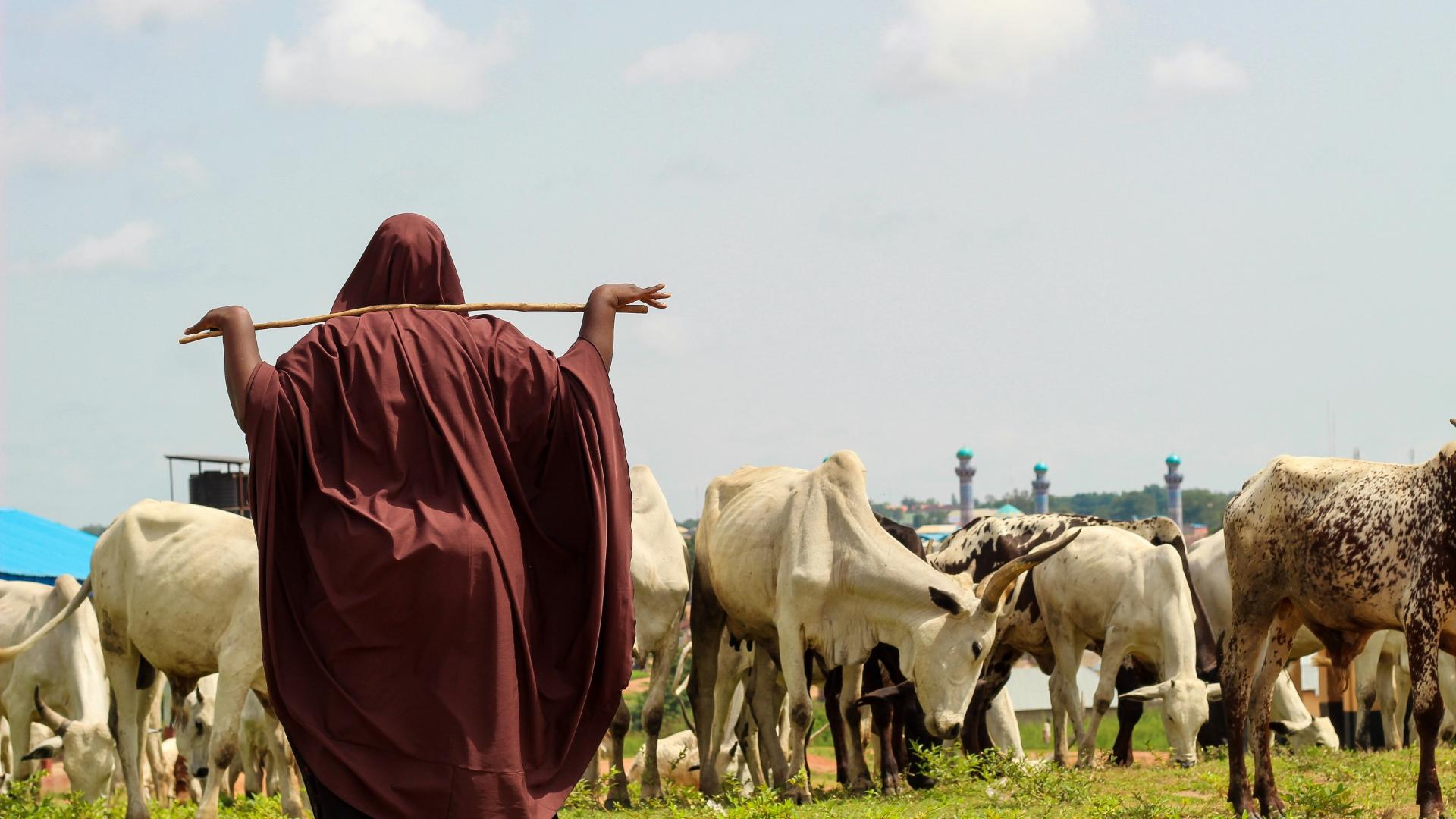
Photo by Fatima Yusuf (Unsplash)
Citation
This brief takes stock of Nigeria’s livestock measurement, reporting and verification (L-MRV) journey to date, outlines the elements of a robust L-MRV system, presents some key challenges and priority actions, and proposes immediate actions, responsibilities and potential support for taking these priorities forward.
About this brief
This policy brief is a joint effort of organizations and individuals involved in the Technical Workshop on L-MRV , held in Abuja, Nigeria on 18-19 August 2026. It summarizes the workshop discussions and priorities identified by participants from government institutions, national and international experts, research, and development partners. The brief also draws upon ongoing livestock data and MRV initiatives in Nigeria to develop a pathway for strengthening L-MRV and supporting the country’s transition towards Tier 2 inventory methodologies.
This builds on previous works including the Climate and Clean Air Coalition (CCAC) 2024 report on the Role of Digital (Extension) Services For Livestock On Tackling Methane Emissions and the Investment Roadmap: digital services for livestock methane in low-and-middle income countries (LMICs) co-developed in 2025 by Livestock Data for Decisions (LD4D), The Deutsche Gesellschaft für Internationale Zusammenarbeit (GIZ) GmbH, and CCAC, with partners. The LD4D investment roadmap identifies four pathways for action, including mobilizing livestock data ecosystems to improve the quality, accessibility, and use of data for MRV. This pathway provided a starting point for identifying and discussing L-MRV challenges and priority actions in Nigeria during the Abuja workshop.
Main messages
- Nigeria is progressing towards using Tier 2 methodologies for Livestock Measurement, Reporting and Verification (L-MRV)1, but important gaps remain in livestock activity data, data quality and accessibility, institutional coordination, and technical and organizational capacity.
- Strengthening L-MRV requires more than filling data gaps. Clear institutional responsibilities, repeated data flows, common standards and procedures, capacity and alignment with the national greenhouse gas (GHG) inventory, Nationally Determined Contribution (NDC) and sector-specific policy processes are also needed.
- The Abuja workshop identified priority actions for progressively improving L-MRV systems, including prioritizing Tier 2 data needs, establishing mechanisms for regularly updating livestock population and performance data, improving data governance and sharing, and strengthening institutional and technical capacities.
- Nigeria is not starting from scratch. Implementation can build on existing national initiatives and partnerships, and draw on lessons from Kenya, Ethiopia and Uganda, and those generated by private sector, while mobilizing targeted technical and financial support for nationally identified priorities.
Nigeria’s L-MRV journey so far
Nigeria is a signatory to the Paris Agreement and the Global Methane Pledge and submitted its first Biennial Transparency Report (BTR) (PDF) in 2024. Nigeria’s latest Nationally Determined Contribution (NDC 3.0) (PDF) targets a 32% reduction in national greenhouse gas emissions (GHGe) from 2018 levels by 2035 and relies on Intergovernmental Panel on Climate Change (IPCC) Tier 1 methodology for calculating its livestock sector emissions. Significant challenges remain: agricultural GHGe increased by 82% between 2000 and 2022 (Figure 1). The NDC identifies a mitigation potential of 2.1 Mt CO2e for the livestock sector (Figure 2), through options including feed supplements, higher-quality feeds to reduce enteric methane, and improved manure management for biogas production. However, the NDC provides limited specificity and quantification on how these measures would be implemented and does not yet reflect the broader range of mitigation opportunities potentially relevant to Nigeria’s livestock systems.
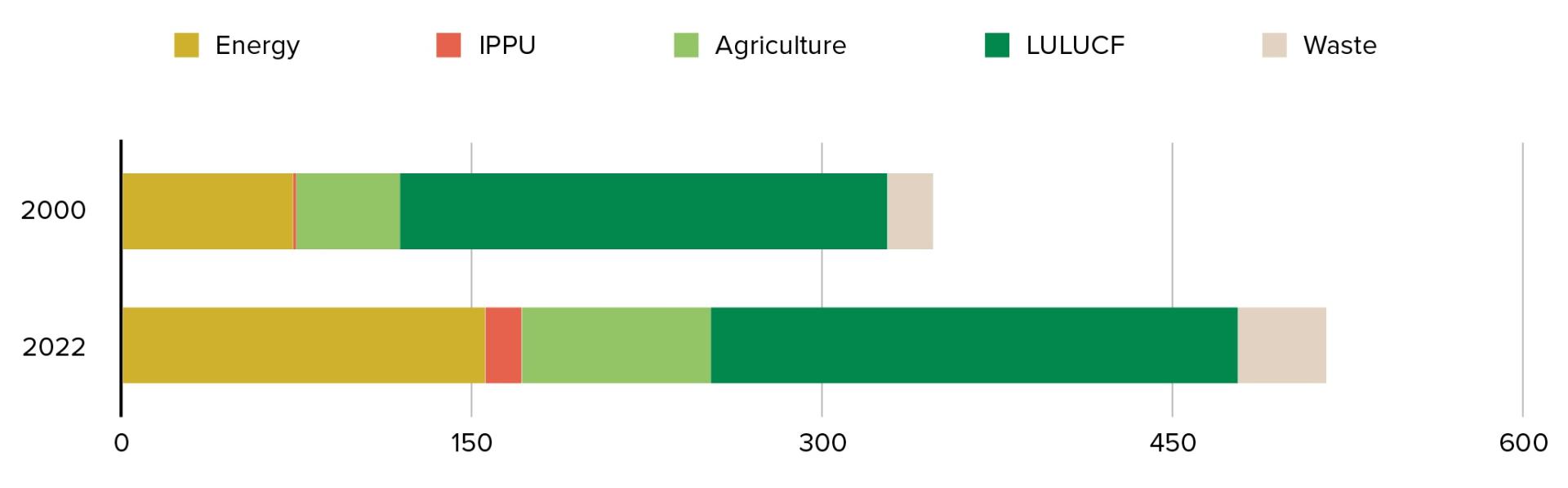
Figure 1. Sectoral net emissions (Mt CO2e) for the years 2000 and 2022. Source: Nigeria's third Nationally Determined Contribution (NDC 3.0), September 2025 (PDF).
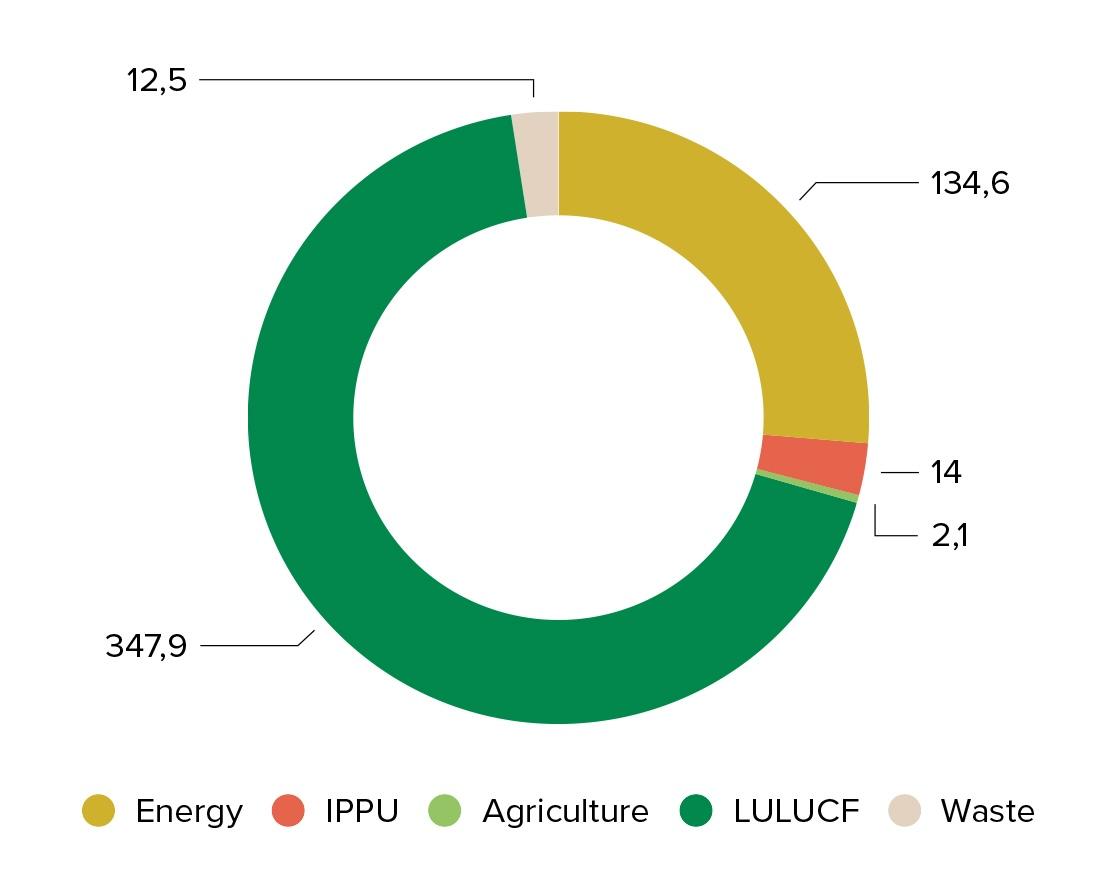
Figure 2. Emissions reduction targets (Mt CO2e) by sector by 2035. Source: Nigeria's third Nationally Determined Contribution (NDC 3.0), September 2025 (PDF).
Nigeria has taken important steps towards implementing a Tier 2 approach for calculating livestock sector emissions. With support from the Climate and Clean Air Coalition (CCAC), the Stockholm Environment Institute developed a Tier 2 agricultural emissions inventory and mitigation assessment for Nigeria, incorporating more detailed livestock characterization and activity data than used in the national Tier 1 inventory. The analysis demonstrated how differences in underlying activity data, particularly livestock population estimates, can result in substantial differences in estimated emissions. While this work provides an important technical basis for Tier 2 development, it is yet to be integrated into Nigeria’s national inventory process.
What does a robust L-MRV system require?
Strengthening L-MRV requires more than improving emissions estimates. Building on the institutional, technical and procedural elements of MRV identified by Wilkes et al. (2020), and considering the broader needs for sustained implementation and use of MRV information, six interconnected components are highlighted below:
- Data and tools: activity data, including sufficient granularity on livestock population and characterization, animal performance, feed and nutrition characteristics, and types of manure management systems, data quality, methods/calculators, as well as quality assurance and control, data architecture and interoperability.
- Institutional arrangements: Division of tasks and responsibilities across government institutions with mandates for collecting, validating, storing, compiling and reporting data.
- Capacity enhancement and continuous improvement: Technical capacity to maintain and update GHG inventory, including identifying data gaps, improvements of the system – rather than a one-off Tier 2 exercise.
- Policy priorities and alignment: National policy questions, tracking priority mitigation measures, while being integrated with NDC/BTR and national inventory processes.
- Investment and climate finance: Capacity to generate credible baselines, monitor mitigation outcomes, and provide evidence to inform livestock investments and access to climate finance.
- Multistakeholder processes/partnerships: All relevant actors across the livestock sector actors are included and consulted on data sharing, coordination, and process of mitigation measures.
Figure 3. Requirements of a robust L-MRV. Sources: Authors’ own elaboration based on Bisson et al. (2025) , Özkan et al. (2022) and Wilkes et al. (2020).
Abuja workshop: MRV challenges & priority actions
The workshop participants identified the following challenges and priority actions (Table 1). The challenges and priority actions below are interconnected and should be viewed as part of strengthening the overall L-MRV system, rather than as stand-alone gaps and solutions.
Table 1. MRV challenges and priorities identified during the workshop.
| Challenge(s)/gap(s) | Priority action(s) |
| Gaps remain in Tier 2-relevant livestock activity data, including reliable livestock populations (by cohort, geographic coverage and production system considering representation of pastoral systems and animal mobility), animal performance, feed characteristics and manure management systems. Livestock census data are not regularly updated. |
|
| Data quality is variable, including in terms of accuracy, recency, granularity and representativeness, while practical constraints such as language can affect consistent data collection. Validation of sample-survey data is challenging. |
|
| Livestock data are dispersed across government agencies, states, research institutions, projects, and private sector actors; with unclear or inconsistent arrangements for data ownership, access and sharing. This leads to siloed datasets, duplication of data collection, and weak data flows into national MRV. |
|
| Livestock-specific data governance arrangements are lacking, including common objectives and rules for data access, sharing, ownership and protection needed to support L-MRV. |
|
| Direct financing for livestock data and L-MRV systems is lacking, including long-term financing for their development, operation, maintenance and continued improvement. |
|
| Capacity to develop and gain access to International Finance Institutions (IFI)-funded livestock investments is limited, including opportunities to integrate L-MRV components and strengthen national technical and institutional capacities. |
|
| Institutional coordination and data flows are weak, including between ministries/agencies and between subnational and national levels, and with private sector actors and commercial producers. |
|
| Institutional capacities and continuity are limited, including structures and capacities needed to sustain L-MRV through administrative and institutional changes. |
|
| Technical capacities are lacking, including identification of country-relevant and livestock-specific mitigation options, calculations of GHGe, modelling, data integration and curation. |
|
Where to start?
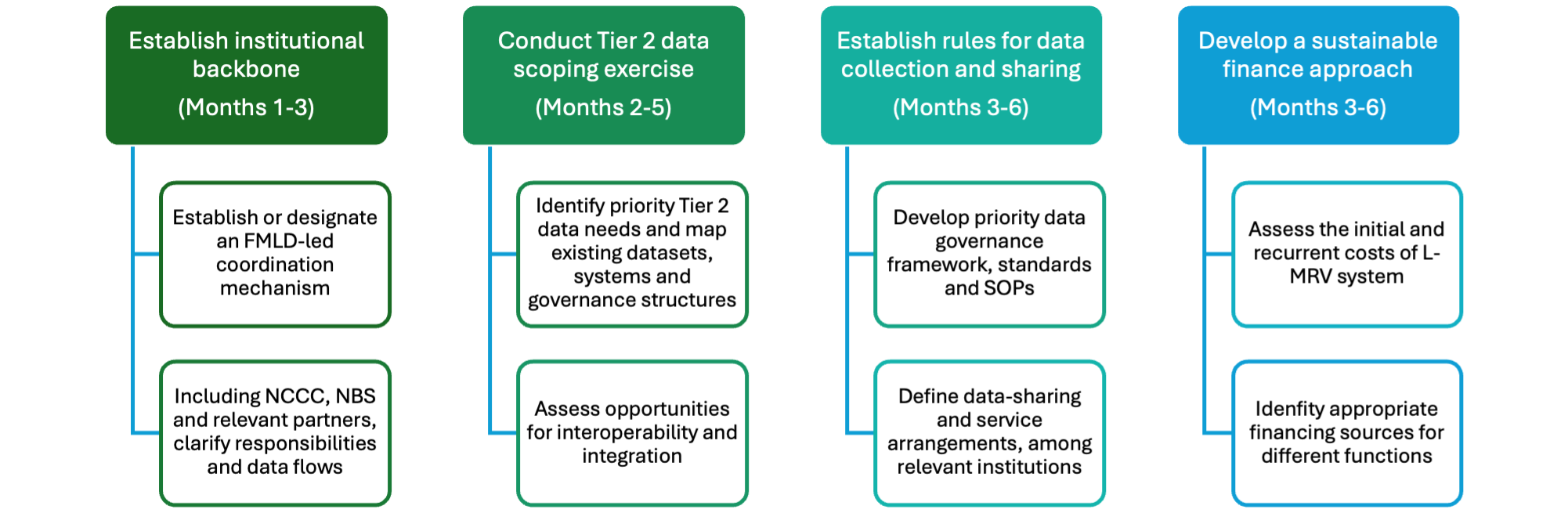
While Table 1 provides a comprehensive set of challenges and priorities, an important question is where to start. Figure 4 (below) highlights a small number of immediate priorities that create the enabling conditions for implementing the broader set of actions. These are not additional actions, but rather immediate priorities drawn from the table above, intended to enable progressive improvements in L-MRV as data systems and institutional capacities develop. The next section connects them with the existing and emerging initiatives.
Connecting to the existing and emerging initiatives and existing capacities
The priority actions identified provide the basis for Nigeria’s L-MRV improvement roadmap. Addressing the challenges identified will require coordinated action by Nigerian institutions, supported where needed by national and international partners. A number of ongoing initiatives provide technical, institutional and data-related building blocks for strengthening L-MRV. These include the GIZ project Catalyzing Transformation towards Sustainable Livestock Systems (LiveSyS) on global agenda and policy advocacy, south-south knowledge exchange, animal health for methane mitigation action, high-level capacity development, common African position, climate finance and climate-smart livestock development, previous CCAC-supported, Stockholm Environment Institute (SEI)-coordinated Tier 2 inventory work and planned MRV assistance, International Livestock Research Institute (ILRI)’s support to co-developing a climate-smart plan for implementing the Nigeria Livestock Growth Acceleration Strategy (NL-GAS) based on data from the Livestock Master Plan (LMP), World Bank’s Livestock Productivity and Resilience Project (L-PRES) on livestock and GHGe mitigation scenarios, as well as other emerging work through LD4D and partners.
Connecting these initiatives to nationally identified L-MRV priorities can help mobilize data, methods, technical expertise, and institutional relationships while avoiding duplication and parallel systems. Nigeria is not starting from scratch. By building on existing national initiatives and drawing on lessons from Kenya, Ethiopia and Uganda, it can help build its L-MRV system progressively, strengthening data, capacities, and institutional arrangements over time.
Acknowledgements
This policy brief was written by Şeyda Özkan (Livestock Climate Solutions, The Netherlands), based on discussions at the Technical Workshop on L-MRV , held in Abuja, Nigeria on 18-19 August 2026 and a desktop review.
We acknowledge contributions from workshop participants and other colleagues, including but not limited to
Afees Adekunle Adeoye (The Deutsche Gesellschaft für Internationale Zusammenarbeit GmbH, Nigeria)
Musa Ahmed (Federal Ministry of Livestock Development)
Lawrence Agbor (Federal Ministry of Livestock Development, Nigeria)
Mohammed Dahiru Aminu (Clean Air Task Force, USA)
Peter Alike (Federal Ministry of Livestock Development, Nigeria)
Shadrack Arum (African Group of Negotiators Experts Support, Kenya)
Admasu Asfaw, (International Livestock Research Institute, Ethiopia)
Shamaila Ashraf (Ashraf Strategies, USA)
David Awolala (African Group of Negotiators Experts Support, Nigeria)
Andrew Bisson (Spark Climate Solutions, USA)
Laura Cramer (International Livestock Research Institute, Kenya)
Dianabasi Akpainyang (CODARAN, Nigeria)
Telvin Muta Denje (African Group of Negotiators Experts Support, Kenya)
Daniel Diri (Federal Ministry of Livestock Development, Nigeria)
Ezegbunam Eucharia (Federal Ministry of Livestock Development, Nigeria)
Asmau Jibril (Federal Ministry of Environment, Nigeria)
Dorcas Jirgi (Federal Ministry of Livestock Development, Nigeria)
Constantine Katongole (Makerere University, Uganda)
Annie Kilroy (Development Gateway, USA)
Bernard Kimoro (Ministry of Agriculture and Livestock Development, Kenya)
Gregory Kohler (Climate & Clean Air Coalition, Canada)
Musa Mansur (Livestock247, Nigeria)
Hajara Muhammad (Alliance for Sustainable Livestock, Nigeria)
Zeleke Mekuriaw (African Union Inter African Bureau for Animal Resources, Ethiopia)
Ana Miranda (SEBI-Livestock, The University of Edinburgh, UK)
Ogunnoiki Ganiyat Asabi Modupelola (Federal Ministry of Livestock Development, Nigeria)
Abdulrahman Mohammed (Food and Agriculture Organization of the United Nations, Nigeria)
Umar Mukhtar (Federal Ministry of Livestock Development, Nigeria)
Chisom Blossom Okafor (The Deutsche Gesellschaft für Internationale Zusammenarbeit GmbH, Nigeria)
Salako Olajumoke (National Council on Climate Change, Nigeria)
Elimi Emmanuel Osuore (Federal Ministry of Livestock Development, Nigeria)
Ogundara Oluwasegun (Federal Ministry of Livestock Development, Nigeria)
Femi Oyeniyi (Ekiti State Polytechnic, Nigeria)
Frances S. Ryan (Stockholm Environment Institute, University of York, UK)
Gareth Salmon (SEBI-Livestock, The University of Edinburgh, UK)
Jude Ikenna Samuelson (Stakeholder Democracy Network, Nigeria)
Salami Sekinat Oseni (Federal Ministry of Livestock Development, Nigeria)
Pierre C. Sibiry Traore (International Livestock Research Institute, Senegal)
Charity Twatimi (Federal Ministry of Environment, Nigeria)
Stephen Joseph Ubandawaki (Federal Ministry of Livestock Development, Nigeria)
Chidike Ude (National Animal Identification and Traceability System, Nigeria)
Endnotes
- An L-MRV refers to the processes and institutional arrangements for estimating, reporting and reviewing greenhouse gas emissions (GHGe) from livestock, including the data, methods and quality assurance procedures needed to produce reliable emissions estimates, track changes over time. These processes also support national GHG inventory reporting under the Paris Agreement's Enhanced Transparency Framework (ETF). Source: UNFCCC. 2014. Handbook on Measurement, Reporting and Verification for Developing Country Parties. Available at: https://www.uncclearn.org/resources/library/handbook-on-measurement-reporting-and-verification-for-developing-country-parties/ and UNFCCC Decision 18/CMA.1, Annex, Chapter II, UN Doc. FCCC/PA/CMA/2018/3/Add.2 (2018), available at https://unfccc.int/sites/default/files/resource/cma2018_3_add2_new_advance.pdf
Accessibility and disclaimer
Accessibility: If you require this information in a different format, please email the LD4D team.
Disclaimer: The views presented here are those of the authors and may not necessarily reflect the views of their institution(s) and/or their funders.