From survival to resilience: camels in Somalia are proving a climate-resilient asset
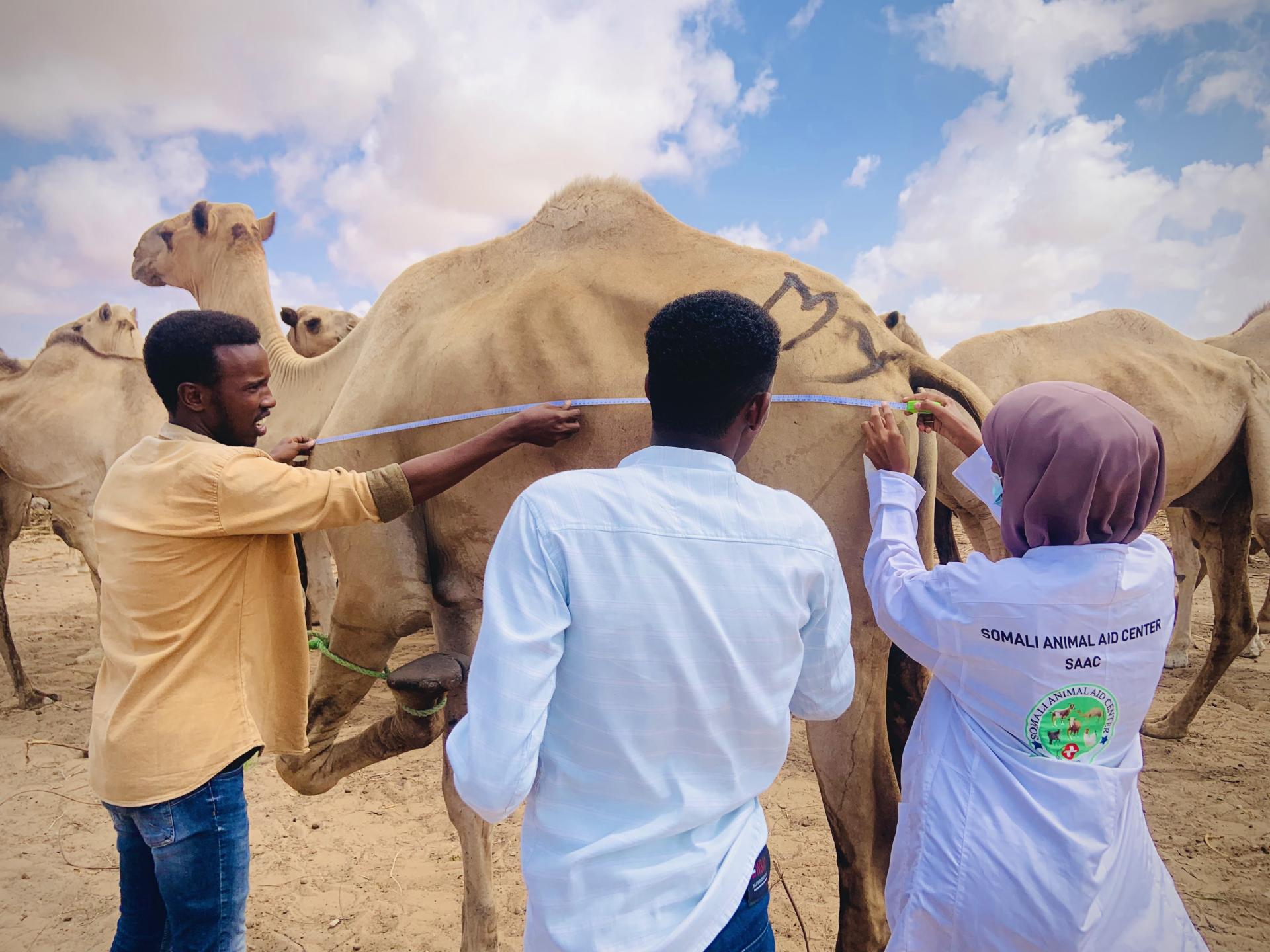
Researchers from Somalia National University record camel body measurements as part of efforts to improve data on camel milk yields
Photo: CE-CaRD, Somali National University
Five years of new farm data are challenging official estimates of Somalia’s camel milk production, highlighting the role of camels as critical climate assets, capable of unlocking powerful economic and livelihood benefits.
By Georgina Smith
When Muna Mohamud’s father died, her family faced a dilemma: sell the camel herd he had spent years building; or learn how to manage it. With no background in livestock, she taught herself everything she could about camels, from disease management to the difference between camel species. Carefully selecting and tagging the highest-yielding animals, her milk output became more reliable, and she was able to meet restaurant orders.
Somalia has the world's second-largest camel population after Chad, and milk production is central to households, pastoral life and exports. Yet the sector is weakly reflected in policy, underserved by processing and cold-chain infrastructure, and shut out of climate finance. Official estimates put camel milk production at only 1-5 litres a day – a fraction of yields from cows in Kenya, which can produce up to 18 litres in intensive systems.
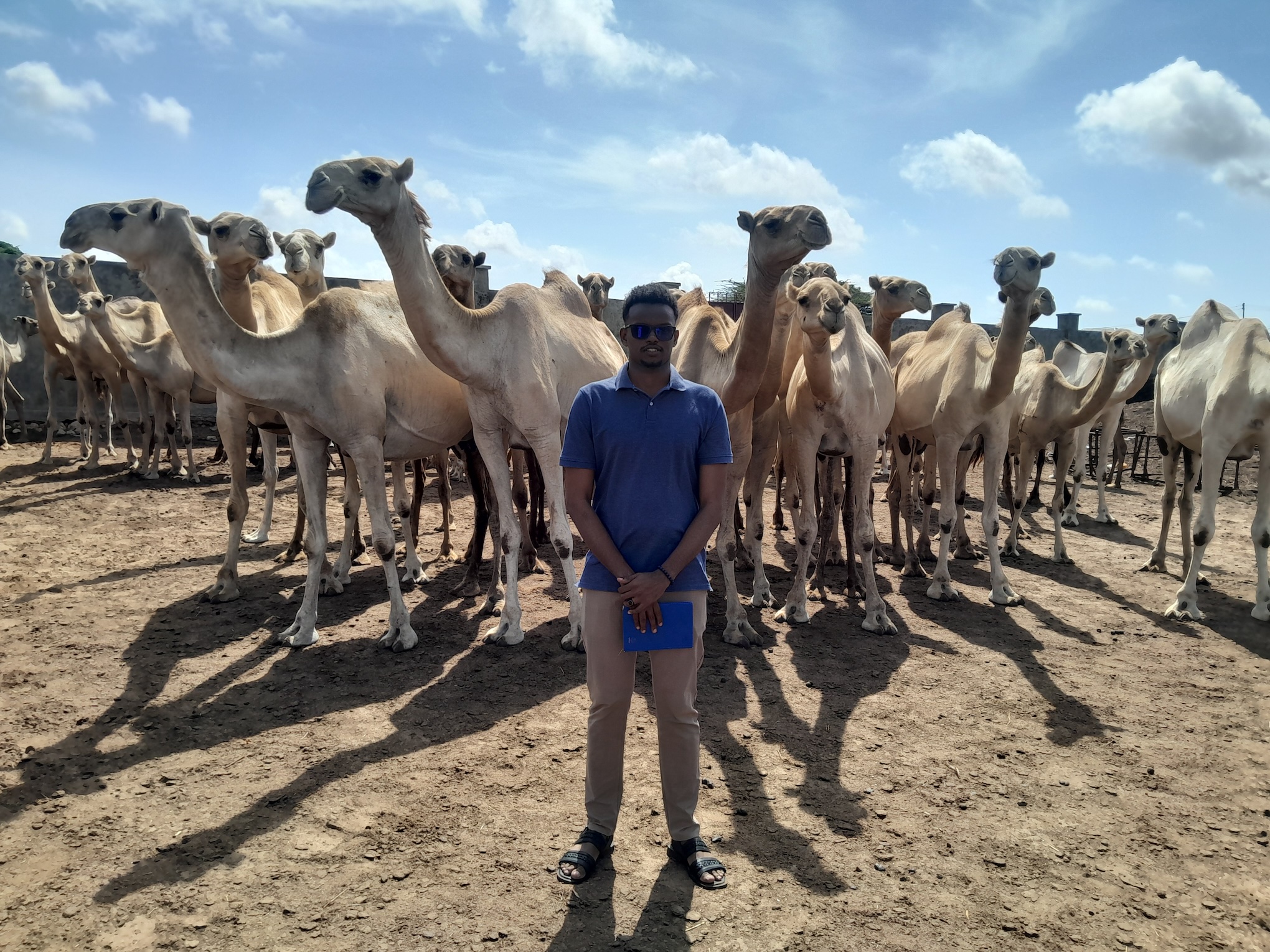
But for researchers at the Centre for Excellence in Camel Research and Development (CE-CaRD), at the Somali National University, the data tells a different story. These hardy animals deserve a bigger role in the country’s economy and climate response, they say. “The milk record data we have collected between 2019 and 2025 has never been recorded before in Somalia,” explains Dr. Daha Hussein Mumin. “No one knows the true potential of camel milk production.”
Filling the data gap
Pastoralists in Somalia have long recognised camel types by body shape, coat, movement, temperament, using this knowledge to improve milk yields over generations. Their hardiness matters: during severe drought between 2020 and 2022, camels went without water for up to 14 days, compared with just 2–3 days for cattle, sheep or goats.
“Our idea is to change how camels are perceived, from an animal that is just used for surviving, to an animal that can transform the lives of people,” explains Dr. Hussein. Camel milk is a staple across Somalia, and its sale and trade are managed mostly by women, giving them a rare opportunity to earn and manage their own income.“We want to improve the camel to improve the lives of pastoralists; to connect them to bigger markets so their milk can be exported,” he adds.
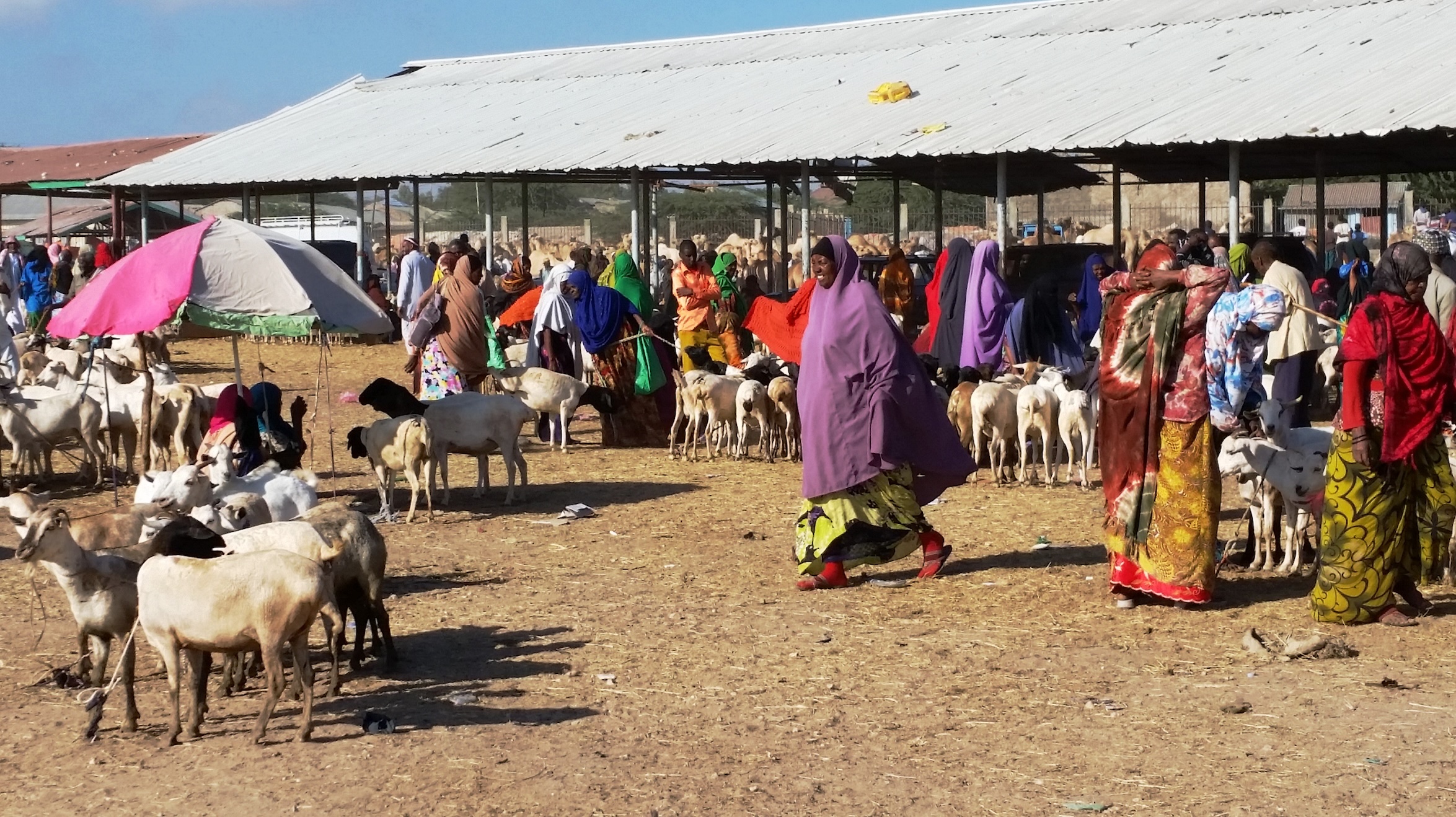
Women carry much of the camel milk value chain in Somalia. They milk and handle the herd, aggregate and measure the milk, manage hygiene, storage and transport, and dominate its sale in towns and along roadsides, making camel milk one of the few reliable sources of income women control directly.
CE-CaRD is now capturing this knowledge systematically for the first time, through an AnimalX Data app developed by Dr. Mehar Khatkar from the Davies Livestock Research Centre, at Adelaide University, Australia. The purpose-built, mobile-friendly application works without an internet connection for offline field data collection and syncs automatically once internet is available.
The app supports genomic selection to improve milk yield, alongside mastitis screening that guides herd management and improves milk-safety – a prerequisite for any future formal milk market. CE-CaRD's milk-quality and antimicrobial-resistance work is also intended to strengthen this management and food-safety dimension.
From evidence to policy
Across camels tracked between 2019 and 2025, commercial farms using AnimalX reported average daily yields of 10 to 16 litres per camel – roughly double the figures most commonly cited for the sector, with one recording an exceptional peak of 28.2 litres. The data also distinguishes consistently productive animals from one-off high performers: Hoor camels, valued locally for their milk potential, make up 60% of the recorded herd.
Why yields differ between commercial and pastoral systems
| Production factor | Commercial or peri-urban farm | Pastoral production system |
|---|---|---|
| Feed and water | More controlled feeding, supplementation and water access. | Seasonal forage and water; greater exposure to drought-related shortages. |
| Mobility | Limited movement and lower energy expenditure for grazing. | Long-distance movement is essential for accessing grazing and water. |
| Health and records | Closer observation, treatment access and individual yield recording. | Veterinary access and systematic recording may be limited or intermittent. |
| Milk allocation | Scheduled, market-oriented milking with close herd supervision. | Milk is shared with the calf and allocated among household and market needs. |
| Market access | Shorter distance to urban consumers and easier aggregation. | Longer transport distances and greater cooling and spoilage constraints. |
Table source: Centre for Excellence in Camel Research & Development (CE-CaRD) | Somali National University
Dr. Shafii Abdullahi Mohamed notes that the new evidence should drive higher production targets nationally. “If there is more supply of camel milk in cities, the price will come down and more people will be able to buy it,” he says – something already visible in the rainy season, when fodder is more abundant. In leaner months, camel milk costs around US$1.5 a litre and meat US$7 per kilogram, putting both out of reach for many urban farmers, who instead rely on imported milk powder.
Data to inform investment
CE-CaRD is now sharing this evidence with the private sector, government and NGOs, starting with a straightforward ask: that official bodies recognize the higher, evidence-based milk production figures rather than outdated estimates that undersell the sector's value. Perspectives are already shifting: banks have opened credit lines for livestock and camel investment, and pastoralists are moving from cattle to camels in the wake of drought. Private sector investment in fodder is growing in Hargeisa and Mogadishu.
But more investment is needed to support refrigeration, and add value to the supply chain, as well as to tap new technology such as satellite data showing where pasture is more abundant for example, or to prevent disease outbreaks. At national scale, cold-chain and processing infrastructure is missing to connect rural supply with urban demand, and investment can be channelled to increase milk quality, for example through Ultra-High Temperature (UTH) treatment for pasteurised milk for export.
“Imagine having among the highest number of camels in the world, and still importing milk from outside of the country,” adds Dr. Mohamed. “We need to encourage pastoralists to produce high quantities of milk that local people can access and buy. This will help with nutrition and food security, and in the future support a self-sufficient economy.”
Muna's story shows what better data, put to good use, can do. As her herd and knowledge grew, she retained higher-yielding camels, and soon was meeting orders of nine, 17- and 20-litres per day: more than many small suppliers could match. Her business has grown, and today she is preparing to expand her product range beyond raw milk to packaged camel milk, yoghurt and cheese. Her story shows that, through improved information and management, camel milk in Somalia can move from a subsistence product to a valuable asset, with women leading the way.
Learn more
CamelXData: a mobile-friendly, offline-first web application for field collection of animal observation data with photo, video, and audio records. User Guide Version 2.4. 2026. By Dr. Mehar Khatkar.
- Available from: camelxdata.web.app.
Georgina Smith is a writer and communications specialist focusing on sustainable development and environmental issues.